In Paris the Azzurri of artistic swimming win two World Cup medals
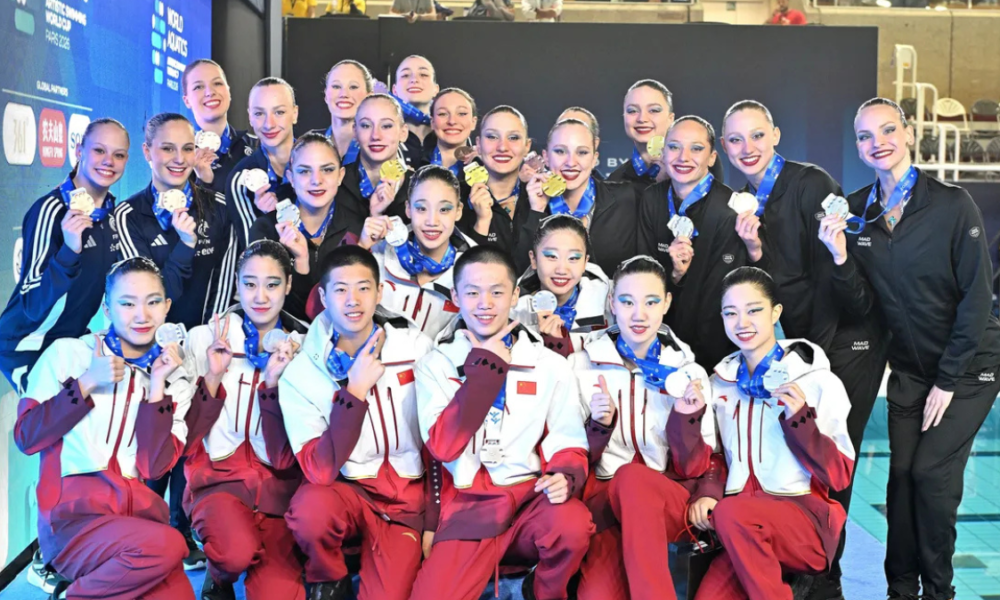
ARTISTIC SWIMMING WORLD CUP 2026 – At home, the French team won two bronze medals in the second stage.
During the first stage of the World Cup, in February in Medellin, the French delegation returned with two medals: both were the prerogative of Laëlys Alavez et Romane Lunelsilver in the free duo and bronze in the technical duo. The second round took place in Paris this weekend and so we were hoping to see the Blues attack the podiums.
Bronze lined
Since Friday, the French ensemble has won bronze in the free competition. Positioned at the end of the evening, the Azzurri were certainly logically far from the Russians and Chinese, but, with the second best score in artistic terms, they logically beat the Kazakh team to get the bronze. The best way to start the weekend.
And since Saturday morning, Laëlys Alavez et Romane Lunel confirmed their status. A third place behind the two Russian couples, and once again, artistically, the Azzurri are at the top. A great way to confirm fifth place at last year’s World Championships (as well as in the technical duo on Friday). Two bronze medals, a fourth place in the technical team (and a fifth in the juniors: enough to aspire to this summer’s European Championship, which will be held… in France.
French medals
Bronze: Anastasia Bayandina, Angéline Bertinelli, Jeanne Clair, Héloïse Guillot, Claudia Janvier, Carla Pusta, Prune Tapie, Lou Thuillier, Esteban Collet (reservist), Milan Violon (reservist) – free team program / Laëlys Alavez and Romane Lunel – free duo
PakarPBN
A Private Blog Network (PBN) is a collection of websites that are controlled by a single individual or organization and used primarily to build backlinks to a “money site” in order to influence its ranking in search engines such as Google. The core idea behind a PBN is based on the importance of backlinks in Google’s ranking algorithm. Since Google views backlinks as signals of authority and trust, some website owners attempt to artificially create these signals through a controlled network of sites.
In a typical PBN setup, the owner acquires expired or aged domains that already have existing authority, backlinks, and history. These domains are rebuilt with new content and hosted separately, often using different IP addresses, hosting providers, themes, and ownership details to make them appear unrelated. Within the content published on these sites, links are strategically placed that point to the main website the owner wants to rank higher. By doing this, the owner attempts to pass link equity (also known as “link juice”) from the PBN sites to the target website.
The purpose of a PBN is to give the impression that the target website is naturally earning links from multiple independent sources. If done effectively, this can temporarily improve keyword rankings, increase organic visibility, and drive more traffic from search results.