How to make your first sparring session less intimidating
Feeling a little anxious for your first sparring session in martial arts is perfectly normal. You have never had the opportunity to test your skills against the resistance to the opponents and you are not sure of how much you will be able to defend you from their attacks.
Don’t sweat, it’s just a sparring session, not the finals of a Muay Thai tournament from the championship. Expert instructors generally do not clarify you to spar if you are not ready and your training partners should shed light on you if it is the first time. In other words, there is no reason to be intimidated when everyone around you in the dojo want to see you are successful.
Because sparring seems so intimidating for the first timers
Performance and social anxiety are common in sparring, but with the right mentality and preparation, you can transform nerves into concentration and trust.
Performance anxiety is rather common everywhere, people compete against each other. It is estimated that about 30-60 percent of athletes experience pre-concrete nerves, which occurs in various ways, such as anxiety, sweaty palms or demoralized feeling.
Social anxiety also makes the execution of others much more unnerving. Research It shows that over 36% of young adults have a social anxiety disorder (Sad). For about 9% of them, it will be a problem that persists for the rest of their life.
Unknown variables still increase the level of anxiety. You do not know the strengths, styles and speeds of your partners Sparring, who amplify the “fight or flight” response.
Fortunately, there are simple things you can do to make your first sparring session less intimidating, so you can focus on testing your moves instead of feeling overwhelmed by anxiety.
1) Check your nerves: breathing and mental preparation
https://www.youtube.com/watch?v=kpskoxrrzne
Spend a few minutes performing a simple respiratory drill known as the 4-7-8 technique to calm the nerves before trampling on the carpet, ring or cage. Inhale for four seconds, hold your breath for seven seconds and exhale for eight seconds.
Research It shows that controlled breathing exercises increase parasimpatic activity, counterbalanced stress hormones.
View for mental preparation
https://www.youtube.com/watch?v=avw8uiyp1sm
After calm down with some breathing exercises, spend a few minutes to view how you expect your sparring session to take place. Imagine performing the techniques and defending yourself against the attacks of your opponent. Studies show that mental evidence helps to reduce anxiety and improve athletic performance as much as physical practice.
2) Read your partner’s body language.
https://www.youtube.com/watch?v=kt25-sghnua
Albert Mehrabian’s 7-38-55 communication model It suggests that 7% of the communication is verbal, 38% are performed through tone and voice, while 55% are through body language. This makes body language the most vital form of communication to be understood in all aspects of life.
Some basic signals that you should be able to interpret when you are ready for your first sparring game include:
- Guard above: A high and narrow guard signals a focus on the defense. You can contrast by targeting the body to convince your partner Sparring to lower your guard.
- Weight distribution: Wait forward pressure if your opponent puts most of their weight on the front foot. On the contrary, an opponent who puts most of their weight on the rear foot could be a sign that plan to pull back and contrast your attacks.
Concentrate your eyes on your opponent’s chest or chest during sparring and you will start noticing small stories in their shoulder and hip movement that make you know when they are about to hit.
3) Understand the unsuitable label: the ring code
https://www.youtube.com/watch?v=tjiuymbhfhy
Each gym has its own atmosphere, but most of the sparring rooms share some universal cortesies:
- Tap the gloves first, punch Bernoccolo or shake your hand before sparring sessions. It is a sign of respect and helps to create confidence. It also reminds you both that you are there to help you each other.
- Communicates the intensity to which I focus on me and stick to it.
- Tap soon if you feel overwhelmed or take one knee.
- Don’t show the boat during Sparring. It is never good.
- Let your partner Sparring know that you want them to lower the intensity if they are going too hard. Do not intensify and combine their intensity unless you are training that way.
4) Create a pre-spart routine
https://www.youtube.com/watch?v=9ov71xt4h8
Create a routine that prepares for the action on sparring days. Perform heating exercises such as legs in the legs, hip rims and arm rot to ease the joints and prepare them. Listen to some music that makes you pump and ready for fighting.
Many fighters have a favorite song that they always listen to before fighting to prepare themselves psychologically. You can also use the song in the days of competition for the same reason.
5) Negotiation of partners: construction of mutual trust
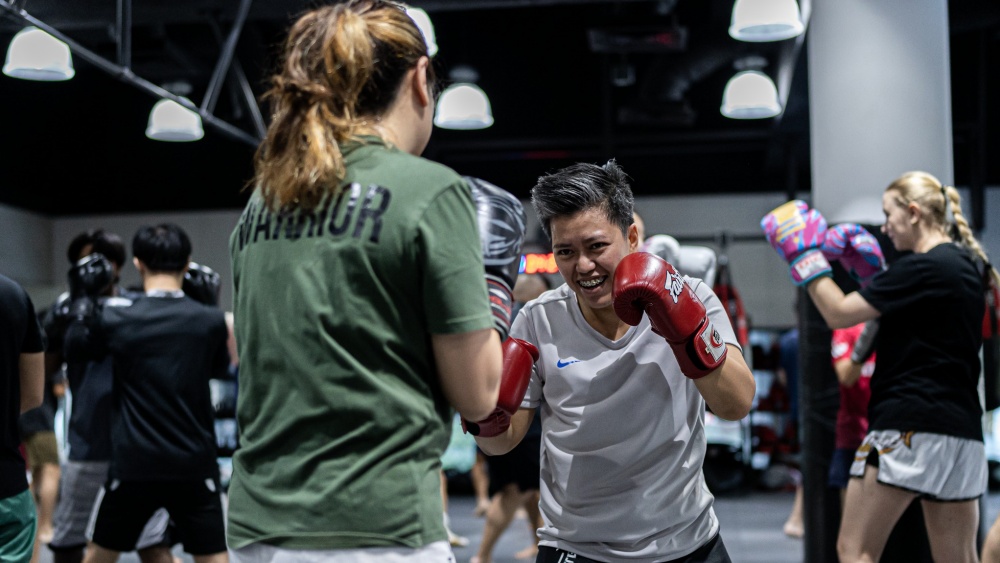
Always communicate the intensity and intent before disappearing to guarantee a safe and productive session for both partners.
Make a quick 30 second chat with your training partner to build mutual trust. Let them know your level of experience and any special request you have, how to go light on your head. You can also inform them that you are open to a constructive feedback while spreading. A considerably more qualified training companion will often know what you are doing wrong.
Communicating with training partners before Sparring Sessions places clear expectations, creating the stage for productive work.
6) Post-action review: rapid debriefing
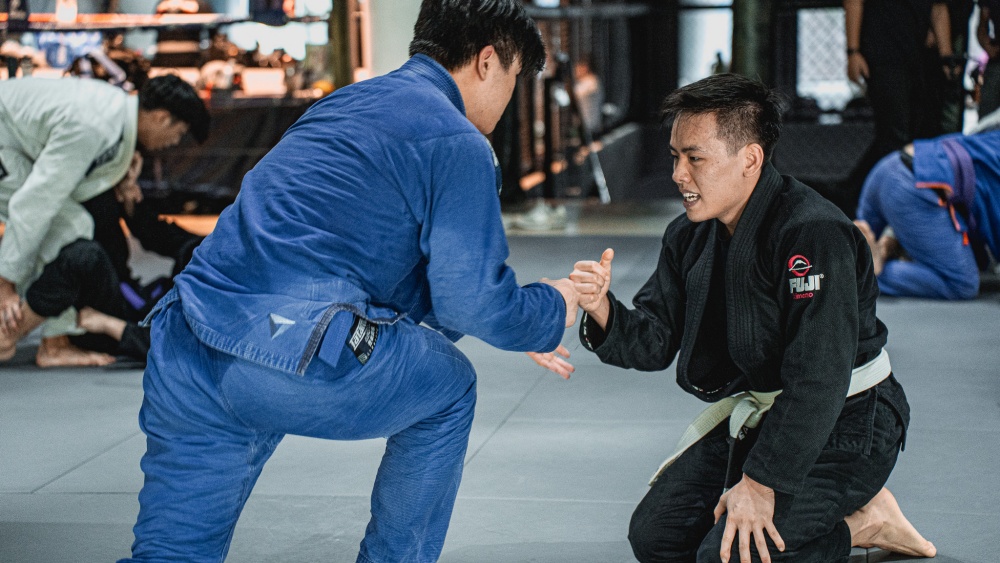
Bump in punch after sparring, exchange feedback and help each other to grow by sharing strengths and areas to improve.
Stop or punch Bump Your Training Partners after disappearing sessions and share suggestions. Let them know what they did well while they do the same for you. Indicates any obvious holes in the combat style you think they should work.
Common sparring errors of the first timer
https://www.youtube.com/watch?v=npq4_imcsjg
Some of the most common shots fall in their first time that Sparring include:
- Be too tense. Relax the muscles and breathe. It will make your techniques more fluid.
- Dropping your hands. Raising your hands as fighters do for prolonged periods is not natural, so it generally takes time to build the habit.
- Exaggeration. It is better to shorten the distances until you can evaluate the distances well enough to fight at the end of your range.
- Do not restore. Take a step back after each exchange and breathe before reinescend.
It’s just a practice, but it builds warriors
Nobody feels at ease 100% on the mat, in the ring or in the cage for the first time it spreads, but every second that you spend there makes you more capable as a fighter. Keep calm, communicate, fix the boundaries, share suggestions with the training partners and your Sparring sessions at the end will seem to be games of intense chess that you start to bramare.
You may also like it:
Fight remote: how to set your fists against the smallest opponent

Evolve Martial Arts® is the brand of the Asia championship for martial arts. He has authentic world champions in Muay Thai, Brazilian Jiu-Jitsu, mixed martial arts, boxing, wrestling and not-gave. Call as the organization of martial arts n. 1 in Asia from the CNN, Yahoo! Sports, Fox Sports, Espn Starsports, Tokyo Times and many other main authorities, evolves MMA aims to provide the best martial arts instructions available everywhere on the planet.
Boxing
Berita Olahraga
Lowongan Kerja
Berita Terkini
Berita Terbaru
Berita Teknologi
Seputar Teknologi
Drakor Terbaru
Resep Masakan
Pendidikan
Berita Terbaru
Berita Terbaru
Berita Terbaru