Reduction of “bar” communications in Bjj: Armerbar, Kneebar, Dogbar and more
Bjj is known for his constantly evolving submission game and, among the many ways to finish a game, the “bar” communications are distinguished as some of the most fundamental and effective. These sending, which generally provide for the hyperextendation of an in -line articulation, combine leverage, timing and technical control. In this article, we will examine the most common types of “bar” attacks in Jiu-Jitsu.
Types of sending in BJJ
https://www.youtube.com/watch?v=3qenpc3z7wg
To appreciate the mechanics and the impact of “bar” communications, it helps to understand the wider types of sending in BJJ. Generally, the sending falls into three categories: joint locks, chokes and strangers and compression blocks. The joint closures affect body zipper points such as elbows, shoulders, knees and ankles. Strozzi limit the blood or air flow, forcing a tap with discomfort or threat of unconsciousness. The compression locks crush the muscle or the bone tissue and are less common but still effective in some scenarios. Among these, joint locks are often the most versatile and accessible, especially when it comes to attacking the limbs.
Attacking the limbs
When you are targeting the limbs in BJJ, the idea is to isolate a single arm or leg, control it completely and apply the pressure on the joint in order to build your opponent to present. The attacks of the limbs allow a wide range of voices and transitions. For example, if someone correctly defends an arm, you could consider the idea of moving on to a choke of the triangle or a homopulated. In the same way, if you go to a knee and your opponent starts, you can often follow with a heel hook. The attacks of the limbs offer options. They keep your opponent on the defensive and give you space to explore your creativity in the middle of a shot or a game.
“Bar” presentations: Armerbar, Kneebar, Dogbar and more
https://www.youtube.com/watch?v=vkf2zp5qdcy
The common thread with bar sending is the lever of the straight line that directly attacks the joint. These techniques are powerful, technical and often surprisingly simple once they are understood their mechanics.
The arm, also known as Juji Gatame, is probably the most iconic submission of BJJ. It turns to the elbow joint by blocking the opponent’s arm between the legs and using the hips as a fulcrum. You are pulling the wrist in one direction while checking the shoulder and, if performed correctly, the presentation is quickly and clean. You can hit this with a closed guard, frame, side control or during transitions, which makes it extremely versatile.
https://www.youtube.com/watch?v=Oblmi4IKM3C
The knee is essentially the same concept, but applied to the leg. Isol the leg of your opponent, check the hip and ankle and extend the knee beyond its natural limit. This presentation can be just as fast and dangerous of an arm, especially when you enter positions like Ashi Garami or after sweeping your opponent. It requires solid control of the knee line and the ability to quickly adjust the corner.
https://www.youtube.com/watch?v=rcjljqzk7ag
Then there is the dogbar, which is a little less known but equally effective in the right hands. The name derives from the embarrassing corner that the opponent’s arm takes, a bit like a dog that raises the leg. Often it begins as a kimura socket from positions such as north-south or side control, but instead of finishing like a lock, submission straightens the arm in a odd diagonal, applying pressure in a unique direction. It is an excellent option when traditional finishes are difficult to find.
https://www.youtube.com/watch?v=wk_55kh240m
You also have the reverse arm, sometimes called a straight arm, which works the elbow from the opposite corner of a classic arm. Often it comes into play from the control of the mountain or the side and can capture an opponent abruptly if they are defending other observations. Another variation, sometimes called the bar shoulder, melts Dogbar and Kimura elements, focusing on the isolation of the arm in a bar style but attacking the shoulder more directly.
Basic application
End like arms, knees and dog bars can be affected by almost every position: what matters most is timing, control and regular execution.
These sending work from almost everywhere, which is part of what makes them so powerful. It is possible to apply the armor from the guard, in particular the closed guard, or from the support when your opponent begins to push against the chest. From the rear control, if the choke is not there, the passage to the arm can finish the job.
The knees can come from the top or below. You could turn in one during a scramble, take one out of it a brushed bankrupt or even hit one to stand if your timing is right. Dog bars and their cousins are often used during transitions. If someone is defending your kimura or frames against lateral control, there is often a small window to isolate the arm and redirect it in a dog bar.
Regardless of the position, the key is timing and control. You are not just grabbing a limb and pulling. You are setting the attack, neutralizing their ability to move and apply the finish without hitches.
Technical considerations
Precision is all with these observations. You have to check the joints above and below what you are attacking. So, for one arm, this means keeping the shoulder and wrist blocked in place. For a knee, it’s about checking the hip and ankle. Without this check, your opponent will flee or defend himself easily.
Your hips also play a huge role. They act as the base of the lever. The more your fulcrum is for the joint, the more power and control you will have. That’s why a good positioning is so important when you end up. The pressure must also be directed directly into the joint. If your corner is off or if you are twisting yourself instead of extending it, you may lose the presentation or give your opponent the opportunity to take sides or contrast.
Finally, you understand the difference between the conformity of pain and the actual rupture mechanics. While some people will touch the discomfort, a clean bar request should work if your opponent is willing to tolerate pain. Stay concentrated and controlled to maintain your safe and effective formation.
Perforation and practice
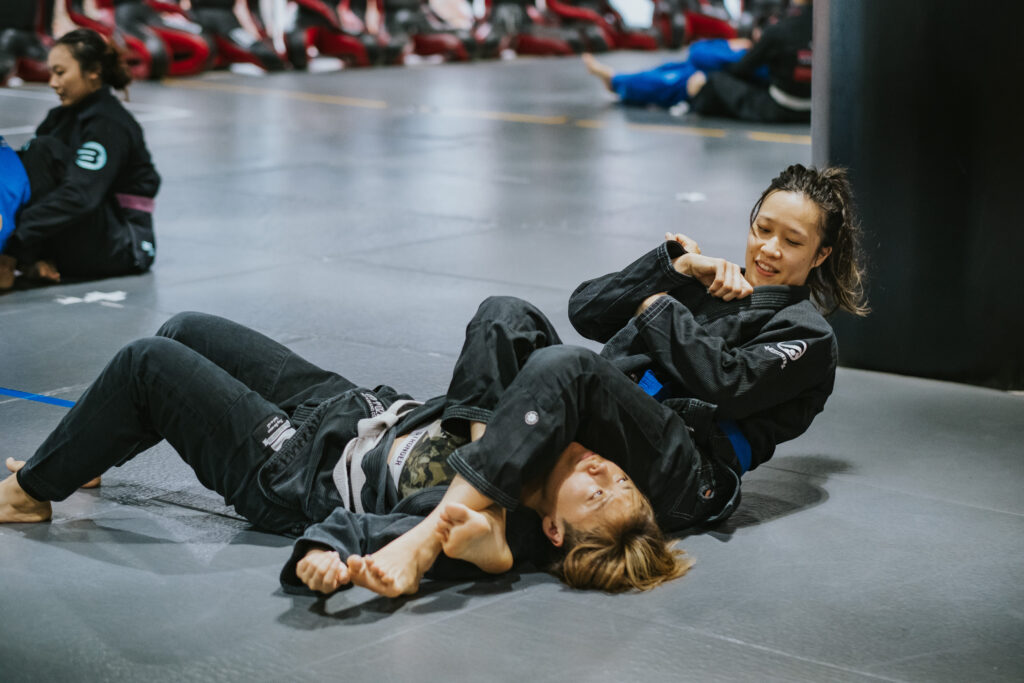
To refine bar communications, do often perforate them, gradually add resistance and use the rolling of the flow to connect the items and create transitions of fluids.
If you want to become good in bar presentations, you have to drill them regularly. He begins by working on clean repetitions of each presentation from common positions. Focus on your corners, handles and control.
Subsequently, introduce the resistance to light. Ask your training partner who tries to defend a little, so you learn to make changes on the fly. Over time, add the positional sparring, in which a person begins in an army or knee configuration and works to end while the other defends.
The rolling of the flow is another excellent way to build fluidity. Try to go from one presentation to another and explore how the different voices are connected. The more time you spend here, the more natural you will hear these sending.
Conclusion
Sending bar to BJJ, such as Armbar, Kneebar, Dogbar and their numerous variations, are fundamental tools that offer both reliability and space for creativity. Whether you are a beginner who learns the foundations or an expert grappler that will perfect your details, mastering the mechanics and the times of these proposals can bring your game to the next level. Continue to drill, remain curious and respect the tap!
You may also like it:
Solist grappling: like Trapani and transitions without partner
Boxing
Berita Olahraga
Lowongan Kerja
Berita Terkini
Berita Terbaru
Berita Teknologi
Seputar Teknologi
Drakor Terbaru
Resep Masakan
Pendidikan
Berita Terbaru
Berita Terbaru
Berita Terbaru